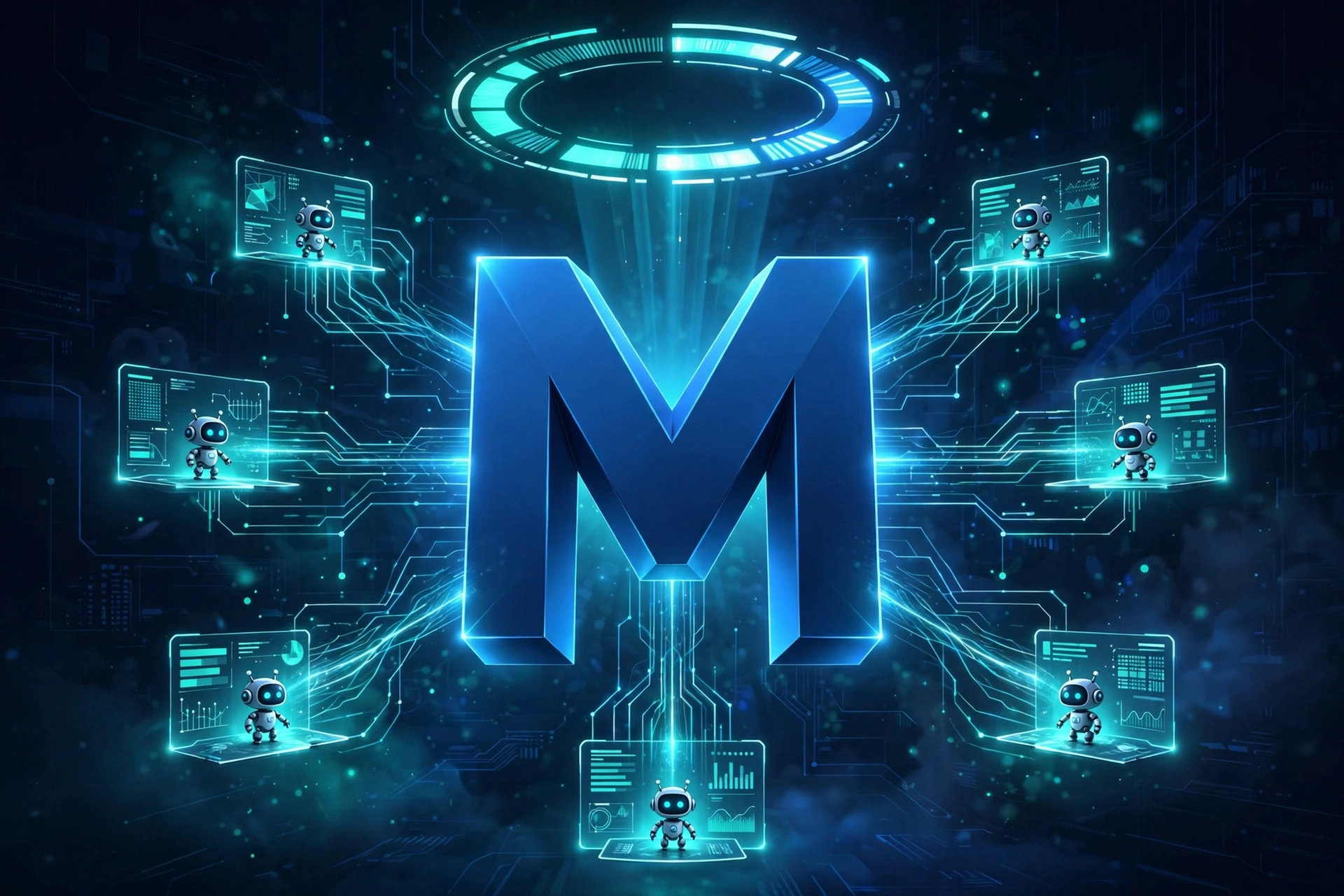
Meta Acquires Conductor: the coding-agent race shifts from models to orchestration — and users must move before Nov 20
On a Wednesday morning, you open Conductor as usual: one branch fixing a login bug with Claude Code, another rewriting an API with Codex, a workspace running Cursor for the interface. Then a notice appears: Conductor has joined Meta, Conductor Cloud is shutting down, and cloud data will be deleted from Nov 20.
If you run several coding agents in parallel on Conductor Cloud, this is a week for action. This article covers what happened, why Meta bought a company that builds no model, and what users must do right now.
Meta Acquires Conductor: What Happened?
On Nov 4, 2026, Axios reported first. The same day, founder and CEO Charlie Holtz confirmed on Conductor’s blog that the company was joining Meta, and Meta confirmed to TechCrunch. Financial terms were not disclosed. Holtz published the shutdown schedule in the same post and in changelog 0.93.0:
| When | What happens | What users must do |
|---|---|---|
| Nov 4, 2026 | New sign-ups and downloads stop | Check whether you use Cloud or only the local app |
| Nov 13, 2026 | Cloud becomes read-only: read old chats, export data, no new messages; subscribers get a refund | Finish moving workspaces and exporting before this date |
| Nov 20, 2026 | Cloud shuts down; cloud data deletion begins | Data not exported by then is lost, with no way to recover it |
| Early 2027 | Local app still receives new models and critical bug fixes, then stops entirely | Use local as a temporary bridge |
What Is Conductor?
Conductor was founded in 2024; its core product launched in July 2025. It builds no model of its own: it orchestrates coding agents from Anthropic and OpenAI — Claude Code, Codex, Cursor, OpenCode — in parallel workspaces.
It solves a specific problem: handing many tasks to many coding agents at once without letting them step on each other in the same codebase — each agent gets its own workspace, branch, terminal, and review flow.
Secondary sources report Conductor raised a $22 million Series A in March 2026 and took part in Y Combinator Summer 2024 — not independently verified, mentioned only as background.
How Conductor Works: Orchestration in Practice
Conductor has four parts: an orchestrator that receives tasks, splits work, assigns agents, and tracks each workspace; isolated workspaces with a separate branch, terminal, and working directory per agent; a multi-vendor adapter, so one workflow can use Claude Code, Codex, Cursor, or OpenCode; and a review-and-merge queue, requiring every agent’s output to be reviewed before it enters the main branch.
A task flows in order: assignment, the orchestrator splits it and creates an isolated workspace per agent, agents work independently, results enter the review queue, the user approves them, and they merge into the main branch.
The bottleneck is review and merge. Parallelism happens at execution, but a human remains the choke point: four agents at once does not mean work finishes four times faster, because the user still has to read four results. In my view, review cost grows with the number of agents — faster than most people expect.
The second limit is workspace state. Code lives in git and can be carried away, but the workspace-branch mapping, chat history, and task context exist only inside Conductor’s system. That state is not an open standard, so export rescues raw data, not a running workflow.
flowchart TD
    Task["Task: assigned by the user"] --> Orchestrator["Orchestrator (Conductor)<br/>Splits work, assigns agents, tracks status"]
    Orchestrator --> WA["Workspace A — Cloud/Local<br/>Own branch + Own terminal<br/>Agent: Claude Code"]
    Orchestrator --> WB["Workspace B — Cloud/Local<br/>Own branch + Own terminal<br/>Agent: Codex"]
    Orchestrator --> WC["Workspace C — Cloud/Local<br/>Own branch + Own terminal<br/>Agent: Cursor / OpenCode"]
    WA --> Review["Review Queue<br/>User reviews each result"]
    WB --> Review
    WC --> Review
    Review --> Merge["Merge into the main branch"]
    Shutdown["Nov 20, 2026: Conductor Cloud stops<br/>Cloud data is deleted"] -.-> WA
    Shutdown -.-> WB
    Shutdown -.-> WC
    WA -.-> Transfer["Before Nov 20: Transfer to local<br/>or Export data"]
    WB -.-> Transfer
    WC -.-> Transfer
    Note["Conductor has no model of its own —<br/>agents come from Anthropic / OpenAI"]
    Note -.-> Orchestrator
Why Did Meta Buy Conductor?
Meta launched its coding agent Muse Code in August 2026 and said its Muse agents had passed 10 million users — a Meta figure, not independently verified. Meta is not short of single agents.
What Meta lacked was a multi-agent workflow layer: parallel agents, isolated workspaces, controlled review and merge — exactly what Conductor spent more than a year building. The Conductor team, including Holtz and CTO Jackson de Campos, joins Meta Superintelligence Labs, working with chief AI officer Alexandr Wang and product head Nat Friedman. Holtz promised a “new interface” in early 2027; beyond that, no details exist.
In my view, the notable point is the market’s direction: the race is shifting from “which model is best” to “who orchestrates many agents best”. As models become a commodity, control moves up to the workflow layer — which task goes to which agent, when to merge, who approves. Conductor held that control point, albeit at a small scale.
On the same day, Nov 4, OpenAI also acquired Pierre Computer Company (secondary-sourced). Meta has not said whether Conductor’s orchestration technology will be opened to outside developers or kept internal.
Moving Off Conductor Cloud Before Nov 20, 2026
This is a migration checklist, not an installation guide: since Nov 4, Conductor has stopped new sign-ups and downloads. The steps below come from the founder’s changelog 0.93.0, dated Nov 4, 2026. I have not run them myself, only checked them against the official documentation.
First, work out which group you are in: Cloud users must act urgently this week; local-only users have less urgency, but the local app also stops in early 2027. List active cloud workspaces and unmerged branches.
Option 1: Move a cloud workspace to local. In the Conductor app, right-click a cloud workspace and choose “Transfer to local”. The workspace and its chat history move to your local Mac, usable in the local app until early 2027. Limitation: this does not preserve cloud execution, and after early 2027 the local app stops too — a temporary bridge, not a new home.
Option 2: Export all data. Go to Settings, choose Account, choose Export data, and download all data before Nov 20. Check the export opens and covers your important workspaces before Nov 13.
Common mistakes. An export missing a workspace is the easiest mistake: compare the cloud workspace list before and after exporting. Waiting until after Nov 20 is unfixable: cloud data deletion begins and there is nothing left to export.
After moving or exporting, reopen each workspace locally and compare branches and important files against the cloud copy before Nov 13. If stuck, contact support@conductor.build — the official channel published by the founder — early, not close to the deadline.
Technical Assessment: Strengths and Weaknesses
Strengths: many coding agents in parallel without conflicts, thanks to workspace isolation by branch and terminal; no lock-in to one model, since one workflow can use Claude Code, Codex, Cursor, or OpenCode; and a clear review-and-merge flow for teams wanting control over agent-generated code.
Weaknesses: total dependence on third-party models and APIs, so quality, price, and stability sit outside Conductor’s control; review cost grows with parallel agents; and no open standard for workspace state — an export is a copy of the data, not a live migration. The decisive limit: the product is shutting down, so every strength above now has only historical meaning.
On security: code and chats once lived on Conductor Cloud; after Nov 20 cloud data is deleted, so export first. The local app gets only critical bug fixes until early 2027. No benchmark or maximum agent count is given — no publicly verifiable data exists.
Alternatives to Conductor
No option copies Conductor exactly. Choose by real need: parallel runs, remote runs, or flexible provider switching.
| Option | Parallel runs | Workspace isolation | Multi-agent | Runs where | Status |
|---|---|---|---|---|---|
| Conductor | Yes | Own branch + terminal | Yes | Cloud + local | Stopped; Cloud closes Nov 20 |
| Orca | Yes | Yes | Yes | Local | Active |
| Worktrunk | Yes | Git worktree | Yes | Local | Active |
| Claude Code on AWS Bedrock AgentCore | Depends on setup | Remote environment | Mainly Claude Code | Remote (AWS) | Active |
| T3 Code | Limited | Work sessions | Yes | Remote + phone | Active |
| CC Switch | No | No | Yes, switch provider | Local | Active |
Orca is closest for running many AI coding agents in parallel; Worktrunk is closest for isolation via git worktree, built on git’s open standard. Claude Code on AgentCore fits for running agents off your laptop, T3 Code for controlling agents from a phone, and CC Switch for switching agent providers.
When choosing a replacement, ask first which open standard lets workflow state escape when the tool disappears.
What Does Conductor’s Shutdown Teach Us?
Developers running parallel agents daily on Conductor Cloud are hit hardest: they lose their working environment and must rebuild their workflow before Nov 20. For DevOps, SRE, and IT managers, the lesson is that an orchestration tool can vanish faster than a model.
Lessons learned
- The data-deletion deadline matters more than the deal announcement: act on Nov 13 and Nov 20, not Nov 4.
- Workflow state does not move like code: chats, workspace-branch mappings, and task context existed only in Conductor Cloud.
- The local app is not a long-term escape when support ends in early 2027 — only a temporary bridge.
- The orchestration layer is the new lock-in point: when choosing one, ask first which open standard — git worktree, branch, file — lets workflow state escape when the tool disappears.
- Multi-model support was a real Conductor advantage, but it vanished with the tool. Lasting value lies in a workflow built on open standards, not a proprietary app.
Conclusion: What Should Each Group Do Next?
Conductor Cloud users should export and move workspaces to local now, finishing before Nov 13 and verifying before Nov 20. Then choose a replacement by real need: Orca for parallel runs, Worktrunk for git-worktree isolation, AgentCore for remote runs.
Local-only users can keep using the app until early 2027 at most, but should start moving to a tool that is still maintained now. Market watchers should note the main signal: the coding-agent race has moved to orchestration.
Not for readers who never used Conductor and need only one coding agent — the Claude Code or Codex docs will serve better.
Verification scope
Checked on Nov 11, 2026, against official sources: the founder’s announcement at conductor.build/announcement, changelog 0.93.0 (Nov 4, 2026), and TechCrunch (Nov 4, 2026). The $22 million Series A, Y Combinator Summer 2024, and “10 million Muse users” are claims published by others, not independently verified; the deal’s financial terms were not disclosed, so this article gives no figure. No verification by installation or hands-on testing: Conductor stopped new sign-ups and downloads on Nov 4, so the author did not install or try it. The Transfer to local and Export data steps come from the official changelog and were not run.
References
- TechCrunch, Nov 4, 2026: https://techcrunch.com/2026/11/04/meta-acquires-ai-coding-startup-conductor/
- Conductor, founder Charlie Holtz’s announcement: https://www.conductor.build/announcement
- Conductor, Changelog 0.93.0, Nov 4, 2026: https://www.conductor.build/changelog/0.93.0-conductor-is-joining-meta
- Orca
- Worktrunk
- Claude Code on AWS Bedrock AgentCore
- T3 Code
- CC Switch
Bình luận
Bình luận được duyệt trước khi hiển thị.Đang tải bình luận…
Để lại bình luận